The seven waterfalls at Krka National Park are famous for their stunning beauty, turquoise pools, and lush surroundings. Take a boat tour or hike to Skradinski Buk, Roški Slap, Manojlovački Slap, and the other falls for a memorable experience.
Quick Information
ADDRESS
Lozovac, Croatia
RECOMMENDED DURATION
5 hours
Timings
08:00–19:00
VISITORS PER YEAR
1000000
TICKETS
From $23.21
NUMBER OF ENTRANCES
5
EXPECTED WAIT TIME - STANDARD
0-30 mins (Peak), 30-60 mins (Off Peak)
Did you know?
Krka National Park was specifically created to protect the natural landscape, unique biodiversity, and cultural heritage of the Krka River and the surrounding region.
The areas surrounding the waterfalls in the national park have one of the densest concentrations of natural lavender in Europe. As a result, the area has a proportionally high concentration of bees and wasps as well.
The Krka River is not the only river within the national park. A portion of the Čikola River, a tributary of the Krka, is also located within the park’s boundaries.
What to see & do at Krka National Park
Monasteries
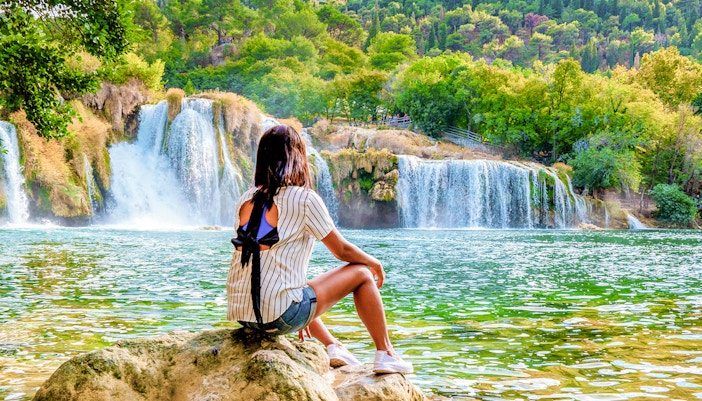
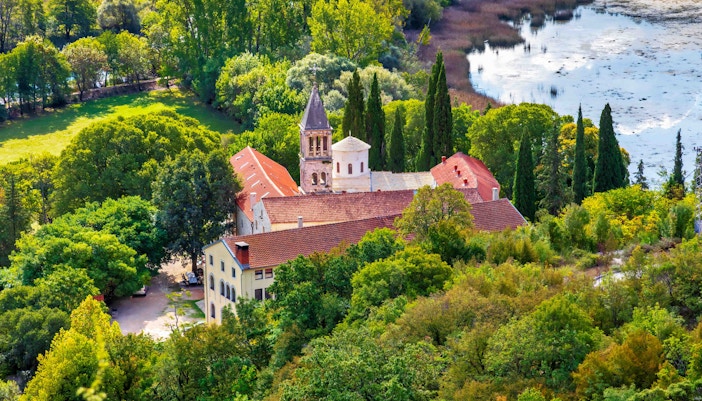
Visit the 15th-century Visovac and Krka monasteries, known for their picturesque settings and historical significance. Not only do they give you a glimpse into the country’s spiritual heritage, but they also offer some of the best views of the park.
Boat tours
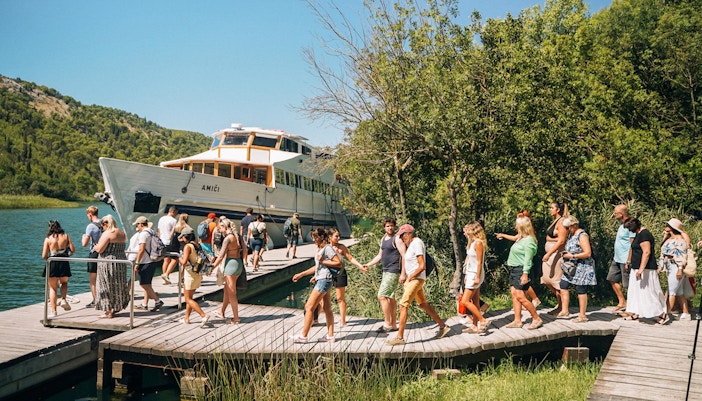
Taking a leisurely boat tour on the Krka River is a fantastic way to explore the park. You’ll sail on crystal-clear aquamarine waters, past lush greenery, and see medieval ruins and stunning waterfalls up close.
Lookout points
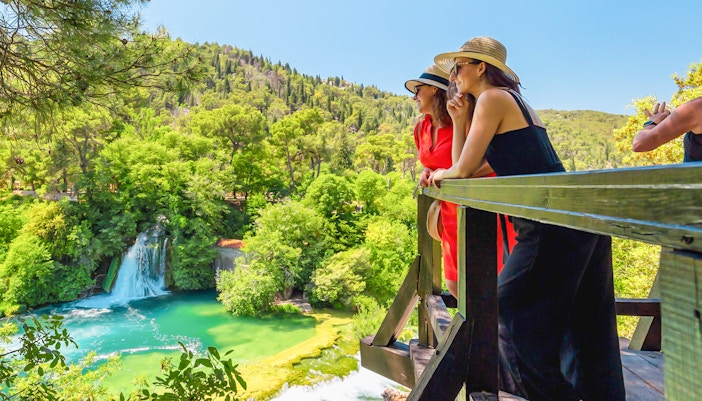
Hike through the park’s lush forests to visit the observation points for panoramic views of the river, including the ruins of medieval fortresses, preserved watermills, the ethno villages, and other historical sites dotting its riverbanks. Soak in the park’s natural beauty from these vantage points.
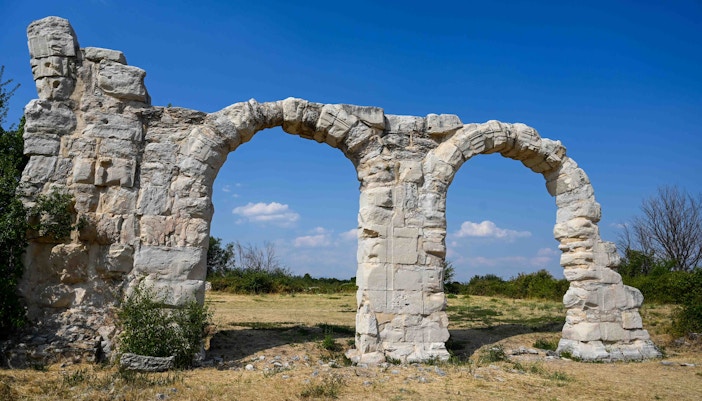
Historical sites
Krka National Park offers historical sites like medieval fortresses, ancient watermills, the Burnum Roman military camp, Oziđana pećina cave, and 19th-century hydropower stations, including Europe’s first hydroelectric plant. Explore these to discover the park’s rich history.

Swimming
Take a refreshing swim in the park’s clear, turquoise waters, surrounded by lush greenery and with incredible cascading waterfalls in the background. There’s no better way to cool off on a hot Croatian summer day.
Krka National Park history
- 5000 BCE to 1100 BCE: Humans inhabited the area around the Krka River since prehistoric times, throughout the Neolithic period (Stone Age), the Bronze Age, and the Iron Age. Remains of human settlements have been found in the Oziđana pećina and Jazinka caves.
- 1 BC to 1 AD: The Romans established a military base near Kistanje, which included a Roman legionary camp, an amphitheater, and other military buildings.
- 11th to 15th centuries AD: Several medieval fortresses were built along the Krka River, including Ključica, Kamičak, Bogočin, Nečven, Trošenj (Čučevo), Rogovo, Uzadh-kula, and Cudato. They played an important role in Croatian history during the Middle Ages.
- 12th to 16th centuries AD: The people living along the Krka River built watermills at the Skradinski Buk and Roški slap waterfalls, which became central to the local economy. The watermills were used to grind grain for flour and process wool into yarn.
- 15th century AD: Two of Croatia’s most significant religious centers, the Visovac and the Krka monasteries, were established on an island in the lake and the banks of the Krka River, respectively, making the region an important spiritual center.
- 1895: The Krka Hydroelectric power plant, Europe’s first hydropower station, was built on the Krka River, supplying electricity to the nearby city of Šibenik and the surrounding areas.
- 1960s & 70s: Recognising the historical, cultural, natural, and spiritual importance of the area around the Krka River, scientists and conservationists began efforts to protect it.
- 1985: The area was officially declared as Croatia’s 7th national park.
Topography of Krka National Park

The Krka river canyon was formed due to tectonic movements and water erosion during the Mesozoic and Tertiary periods, between 250 million and 2 million years ago. As the river cut through the porous limestone terrain, it created a series of karst formations, including gorges, caves, underground streams, and the distinctive tufa (travertine) barriers.
Over the centuries, the river water flowed over the tufa formations, resulting in the terraced pools, cascades, and waterfalls we see today.
The mineral-enriched waters of the Krka River and the unique karst geology made the region rich in its biodiversity. The park’s dense forests, rolling meadows, and rocky cliffs are home to a vast variety of plant, animal, and bird species.
Discover the Krka River

The Krka River originates at the foot of the Dinara mountains, near the border with Bosnia-Herzegovina. It flows through Croatia’s central Dalmatia region before emptying into the Adriatic Sea. Its 73-kilometer (45 miles) long course, mostly through a picturesque canyon, is famous for its many cascading waterfalls. The river and its habitats are also home to several diverse species of plants, birds, and animals, including aquatic life. These include wolves, otters, wild cats, olm, and several species of bats like the long-legged or long-fingered bat and the greater horseshoe bat.
The river has been central to the region’s development over the centuries. Several fortresses were built strategically on its banks during the Middle Ages, while industrialization in the late 19th century saw no less than 4 hydroelectric power stations built to harness its power.
Today, it is the core of Croatia’s second-most popular nature reserve after Plitvice Lakes National Park.
Krka National Park or Plitvice Lakes National Park – which one to visit
Krka National Park is Croatia’s second-most visited nature reserve, right Plitvice Lakes National Park. Both parks are famous for their waterfalls and natural beauty, which often raises the question: which one is better to visit?
Choosing between the two national parks depends on your preferences and what you’re looking to do. Plitvice Lakes National Park has 16 interconnected emerald-green lakes, several magnificent waterfalls, and scenic boat tours, so there’s no dearth of stunning vistas. Krka National Park has beautiful waterfalls too, but it also offers a larger variety of things to see, like historical ruins, archaeological sites, monasteries, and exhibitions.
Unlike Plitvice Lakes National Park, where swimming is strictly prohibited, Krka National Park has certain designated spots where you’re allowed to take a plunge in the clear blue-green waters. Krka is a little better equipped in terms of accessibility, but not by much. And while you can drive your own vehicle inside Krka at certain times of the year, Plitvice can be explored only on foot or by the park’s own boats and shuttle buses.
As the country’s most popular nature reserve, Plitvice Lakes attracts more crowds than Krka, especially during the peak summer season from June to August. This is also because there is a cap on the number of visitors allowed into Krka National Park each day.
However, while Plitvice Lakes is larger, its attractions are located closer to each other, and the park is easier to get around. The attractions in Krka are farther apart, and many can be accessed only by driving to them or by boat.
Finally, your choice of whether to visit Krka National Park or Plitvice Lakes National Park might depend on where you’re staying in Croatia. It is easier to reach Plitvice Lakes from Zadar and Zagreb, while Krka is located quite close to the cities of Split and Trogir, and not very far from Zadar either.
In short, both parks have their advantages. If you’re travelling Croatia, you should definitely visit at least one of them. Whichever of the two you choose, you’re sure to have an unforgettable experience!
Frequently asked questions about Krka National Park
Krka National Park is Croatia’s second most popular nature reserve, famous for its waterfalls, the aquamarine water of its river and lake, and its natural beauty.
You need tickets to enter the park. You can book your Krka National Park tickets online.
There’s no dearth of experiences at Krka. You can explore the park by boat, shuttle bus, car, or on foot. Visiting the waterfalls is a must. You can also explore medieval monasteries, other historical sites, a traditional village exhibition, and 19th-century hydroelectric power plants.
Yes, certain trails and areas of the park are accessible to wheelchair users. The park’s shuttle buses and boats are also equipped to accommodate wheelchairs. However, the steeper and more uneven hiking trails, as well as attractions located further away from the entrances, may not be accessible.
Yes, you can take as many photographs and videos inside the park for personal use. You need prior special permission from the park’s authorities to photograph and film for commercial purposes.
Wear comfortable clothing and sturdy footwear, as most of your exploration will involve walking. Waterproof footwear is recommended. It is also better to carry a light jacket even if you’re visiting during the summer since the weather can unexpectedly turn chilly.
Absolutely! Krka National Park is one of Croatia’s most scenic regions, with its waterfalls, crystal-clear waters, hiking trails, and numerous historical attractions.